Ready to fill matters most.
Your receiving team cannot add a box-assembly step, or the product and insert need a formed structure as soon as they arrive.
Still check the finished box, insert and actual shipping carton. PACKAGING, CONSIDERED.
If empty gift boxes travel before they are filled, the real question is where the assembly work should happen. Compare the ready-to-fill fixed box with a fold-flat route around the same product and packing operation.
Explore collapsible rigid boxes ↗︎These are screening conditions, not a final specification or a cost verdict.
Your receiving team cannot add a box-assembly step, or the product and insert need a formed structure as soon as they arrive.
Still check the finished box, insert and actual shipping carton.Empty-box storage or transport space matters and a named packing team can erect, inspect and fill each box.
Confirm assembly time, connections, closure and product fit on a physical sample.Neither format is automatically cheaper. Compare matched usable inside dimensions, carton counts and the complete packing work before deciding.
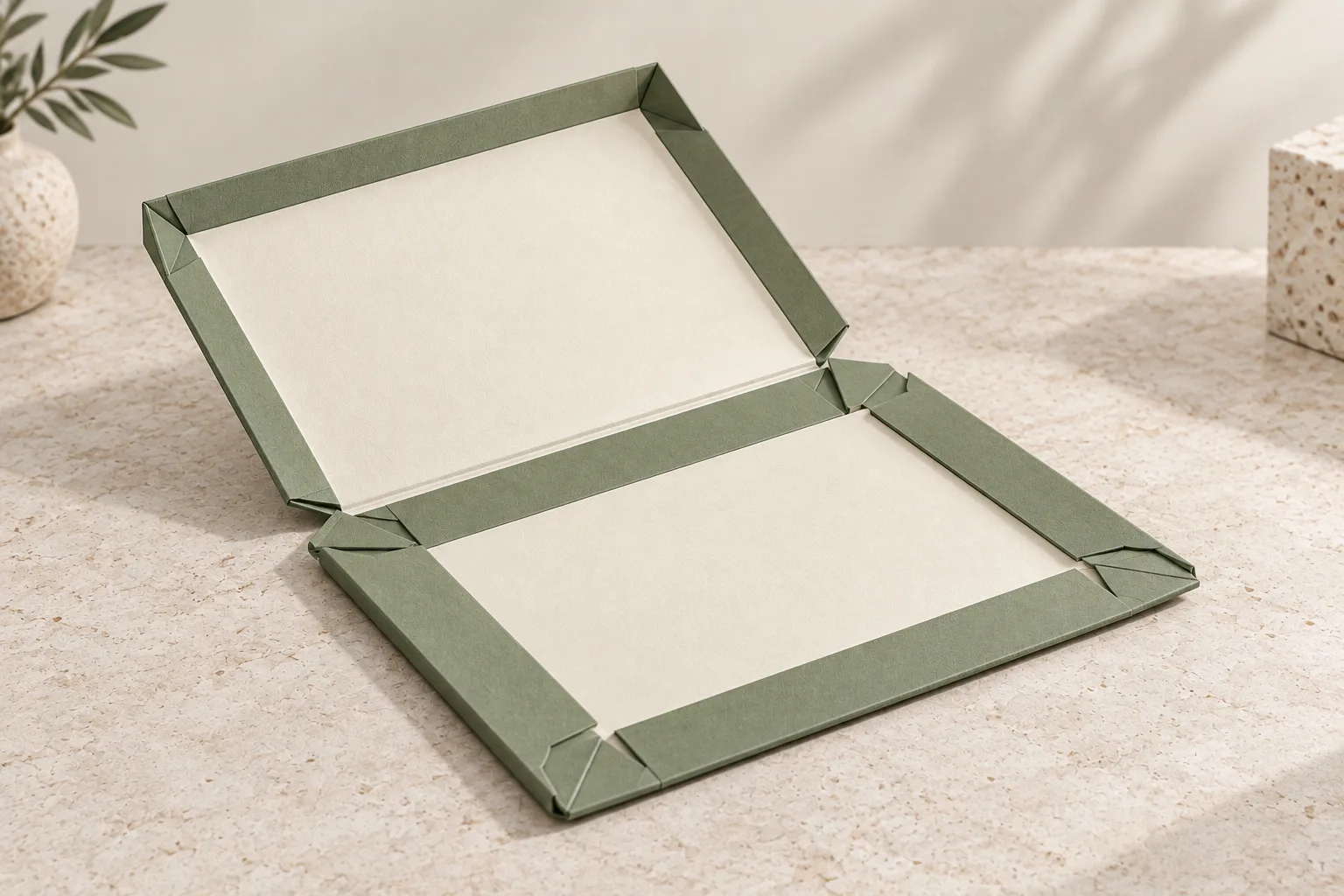
Imagine an empty gift box that should feel substantial when opened. The buyer must decide whether boxes arrive ready to fill or are assembled by a packing team at the destination.
The product set, usable inside dimensions, order quantity and destination would need to be defined before either route can be compared fairly.
A collapsible construction can travel and be stored in a flatter form, then be erected before packing. That shifts assembly, joint inspection and potentially insert placement to a specific team.
The illustrated box suggests this route; its actual fold geometry and packed profile have not been validated.
A fixed rigid box normally reaches the packing operation already formed. If the receiving team has little time or space to assemble boxes, that may matter more than a flat-pack shipment.
Unit price alone cannot settle the choice: compare the same usable size with real carton data, assembly time, insert handling and damage observations.
Actual product, usable inside dimensions, presentation requirement, quantity and delivery destination.
Outer-carton dimensions, boxes per carton, assembly time, insert packing, inspection and damage or rework seen in a real trial.
No freight, storage or cost saving is claimed for this concept. A real comparison needs matched samples and recorded packing conditions.
Read these after the flat-form view above. The images suggest an assembled appearance and a corner condition; they do not prove the same structure can be manufactured.
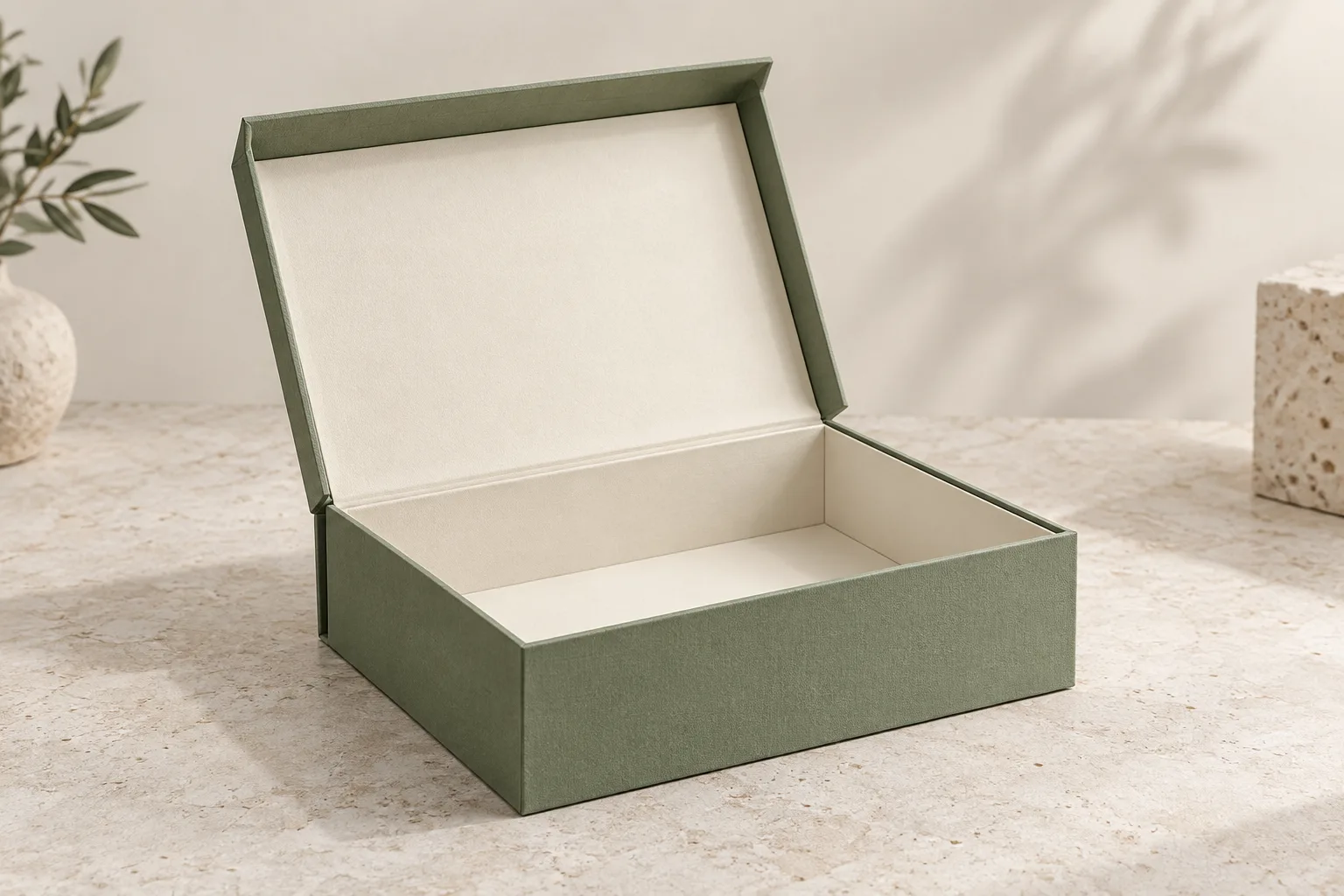
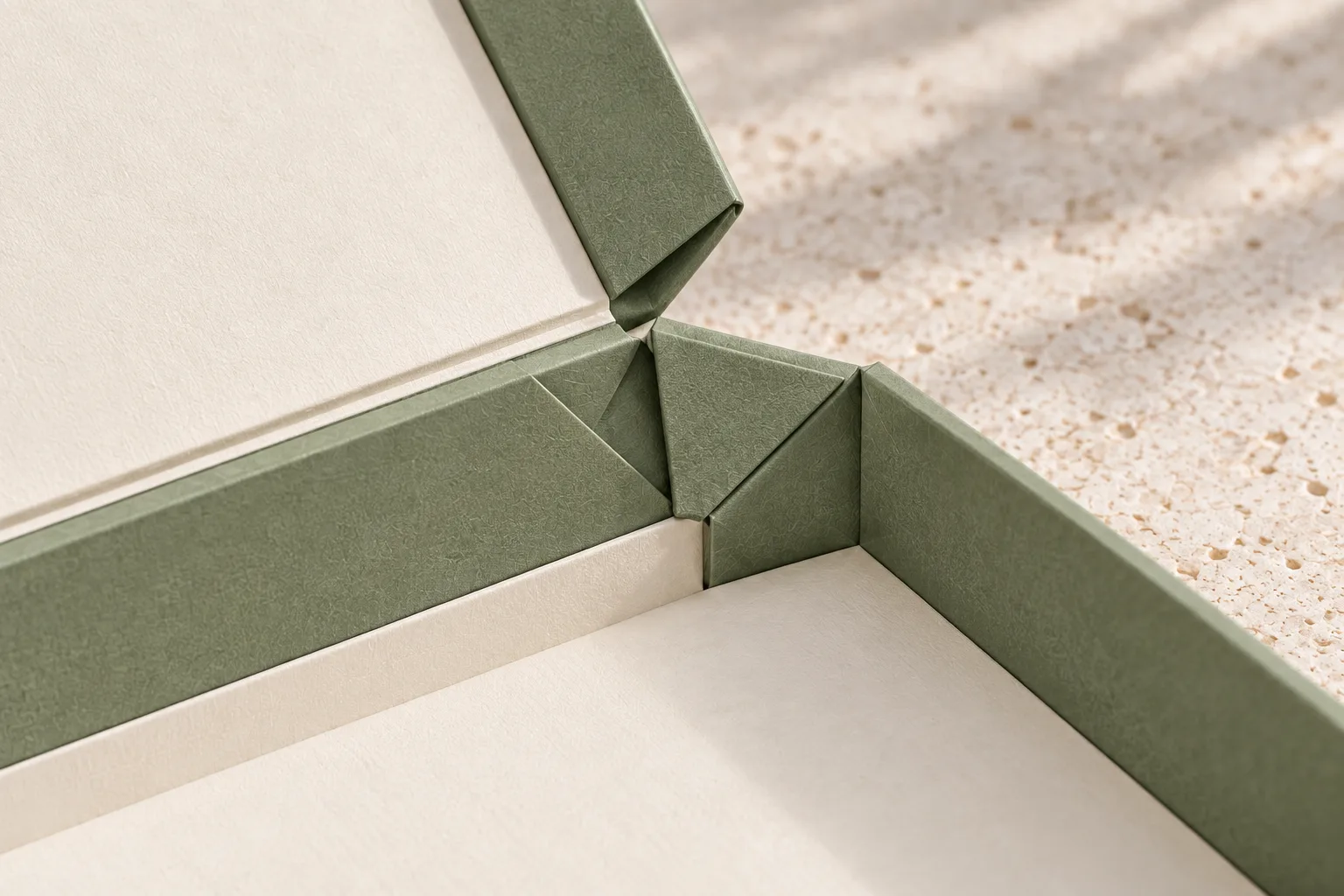
These checks are proposed for a future project. None was performed for the pictured concept.
Send the product dimensions and weight, quantity per design, destination, assembly owner and preferred delivery form. A box or outer-carton reference is useful if you have one. YDP can then identify which matched samples and packing measurements are needed.